From Oil & Gas to Water Supply: Why Gate Valves Are Vital in Every Industry
Gate valves are among the most widely used flow control components in industrial pipeline systems. Their robust design, simple operation, and ability to provide full, unobstructed flow make them the preferred choice across dozens of sectors—from Oil & Gas, Petrochemicals, Power Generation, Water Treatment, and Mining to HVAC, Steel Plants, and general industrial utilities.
Despite being one of the oldest valve designs in engineering history, the gate valve remains indispensable even today. But why? What makes it so versatile? And how does it support dynamic and high-pressure industrial environments?
What Is a Gate Valve? A Quick Overview
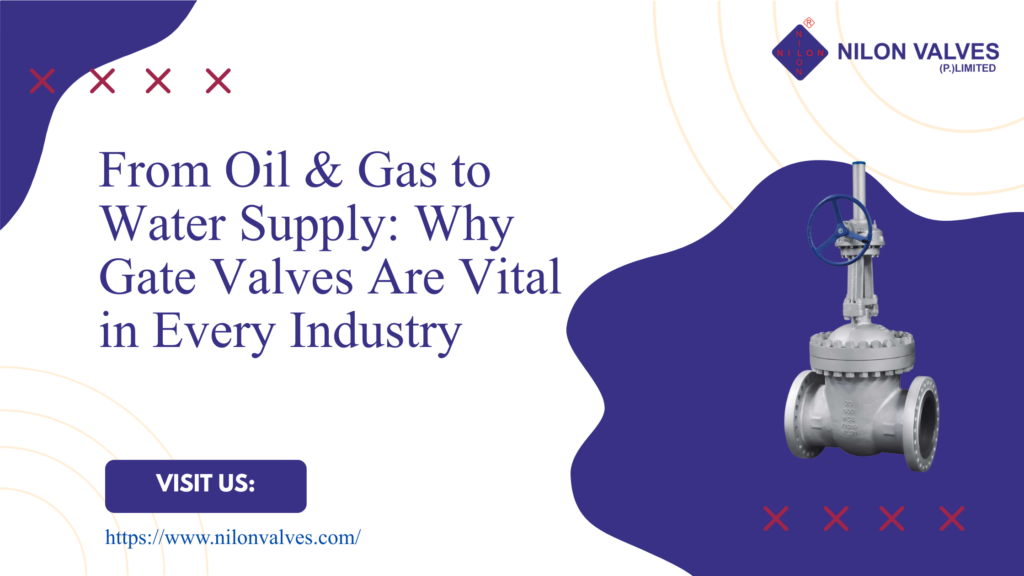
A gate valve is a linear motion valve designed to start or stop the flow of liquid in a pipeline. It uses a “gate” (disc or wedge) that moves perpendicular to the flow direction. When fully opened, the valve offers:
- Minimal pressure drop
- Straight-through flow path
- No obstruction
- Low turbulence
This makes gate valves ideal for applications requiring on-off control, not throttling.
Why Gate Valves Are Critical Across Industrial Sectors
Gate valves are the backbone of industrial infrastructure because they offer:
1. Reliability in High-Pressure & High-Temperature Conditions
Industries such as Oil & Gas and Power often operate under extreme conditions. Gate valves, especially forged or cast steel designs, are engineered to sustain:
- High pressures
- Elevated temperatures
- Corrosive and erosive media
This mechanical resilience makes them ideal for critical services.
2. Low Flow Resistance
The unobstructed flow path significantly reduces pressure drop. This is essential for:
- Long-distance oil pipelines
- Water transmission main lines
- Chemical transportation systems
Low resistance means higher efficiency and lower energy costs.
3. Bidirectional Flow Capability
Gate valves can handle flow from either direction, making pipeline design flexible and cost-effective.
4. Tight Shut-Off
While not as leak-tight as globe or ball valves in certain services, gate valves provide excellent shut-off performance when fully closed. This is vital for:
- Emergency isolation
- System maintenance
- Pressure containment
5. Compatibility with Many Fluids
Gate valves support a wide range of fluids:
- Liquids: water, oil, fuels, chemicals
- Gases: steam, natural gas, compressed air
- Slurries: mining slurry, wastewater
Few valve types support such versatility.
How Gate Valves Work: Understanding the Mechanism
Gate valves operate using a rising or non-rising stem connected to a wedge-shaped gate. Turning the hand wheel moves the stem and lifts or lowers the gate.
Types of Gate Valves
- Wedge Gate Valve (most common)
- Excellent sealing
- Suitable for high pressure
- Parallel Gate Valve
- Used in low-pressure applications
- Self-cleaning sealing design
- Rising Stem Gate Valve
- Easy visual indication of valve position
- Non-Rising Stem Gate Valve (NRS)
- Ideal for underground or space-limited areas
- Knife Gate Valve
- Designed for slurries, thick fluids, and wastewater
Gate Valves Across Major Industries: Where Are They Used?
Now let’s explore the core industries where gate valves are essential and understand their purpose in each.
1. Oil & Gas Industry
Upstream (Exploration & Production)
Gate valves are widely used in:
- Wellheads
- Manifolds
- Christmas trees
- Drilling mud systems
They handle crude oil, drilling mud, produced water, steam, and gas under high pressures.
Midstream (Transportation & Storage)
Gate valves play a critical role in:
- Cross-country pipelines
- Pumping stations
- Storage terminals
Pipeline infrastructure demands valves that offer minimal pressure drop and long service life—two areas where gate valves excel.
Now let’s explore the core industries where gate valves are essential and understand their purpose in each.
2. Water Supply & Wastewater Management
This is one of the largest application areas for gate valves.
Applications include:
- Water treatment plants
- Municipal water distribution
- Irrigation systems
- Sewage pipelines
- Desalination plants
Gate valves ensure uninterrupted flow in mainlines and provide isolation during maintenance. NRS and OS&Y gate valves are common here.
3. Power Generation
Power plants operate under harsh conditions—steam, boiler feedwater, condensate lines, and cooling systems.
Gate valves are used in:
- Boiler isolation
- Turbine systems
- Cooling water lines
- High-pressure steam lines
In thermal and nuclear power plants, forged steel gate valves are widely used for their strength and reliability.
4. Chemical & Petrochemical Industries
These industries handle aggressive chemicals, acids, solvents, and gases. Gate valves made of corrosion-resistant materials (SS316, Duplex, Alloy 20, Hastelloy) are mandatory.
Applications:
- Chemical reactors
- Storage tanks
- Transfer lines
- Process lines
- Safety isolation systems
5. Mining & Metals Industry
Knife gate valves are prevalent due to their ability to cut through:
- Slurries
- Ore concentrate
- Mud
- Tailings
Gate valves also regulate cooling lines, lubrication systems, and main process water pipelines.
6. Pharmaceutical & Food Processing
These industries demand hygienic flow control. Stainless steel gate valves with:
- Smooth internal surfaces
- Crevice-free design
- Sanitary end connections
7. HVAC & Building Construction
Gate valves support:
- Chilled water systems
- Hot water pipelines
- Firefighting lines
- HVAC distribution lines
They provide reliable isolation at low cost.
Also Read: Reinventing Valve Performance with AI: What Leading Manufacturers Are Doing in 2026
Advantages of Gate Valves That Make Them Irreplaceable
1. Full Bore Flow
Allows pigging, high flow rates, and low pressure drop.
2. Durable and Long-Lasting
With proper maintenance, gate valves can operate for decades.
3. Suitable for Large Diameters
They are available from ½ inch to several feet, making them ideal for municipal and industrial pipelines.
4. Wide Material Availability
From cast iron and carbon steel to advance alloys.
How to Select the Right Gate Valve for Industrial Applications
Choosing the correct gate valve is essential for safety and performance. Key factors to consider:
1. Material Selection
Based on the fluid:
- Water: Cast iron, ductile iron
- Oil & Gas: Carbon steel, stainless steel
- Chemical: Alloy steel, duplex, specialty alloys
- Steam: Forged steel
2. Pressure Rating
Common ratings include:
- PN6 – PN40
- Class 150, 300, 600, 900
Higher ratings handle higher pressures.
3. Temperature Resistance
Select valves that can withstand the maximum process temperature.
4. End Connections
- Flanged
- Screwed
- Welded
- Grooved
5. Operation Type
- Manual
- Gear operated
- Electric actuators
- Pneumatic actuators
6. Standards & Certifications
Look for:
- API 600 / API 602
- API 6D
- BS / DIN
- ISO
- IBR (India)
- Fire-safe certification
Common Challenges Gate Valves Solve in Industrial Systems
1. Need for Reliable Isolation
Gate valves provide bubble-tight shutoff in critical lines.
2. Handling High Pressure
They maintain integrity under severe pressure variations.
3. Compatibility with Large Pipe Sizes
Most valves fail above 12 inches, but gate valves remain reliable.
4. Resistance to Corrosion & Erosion
With proper material selection, they withstand harsh fluids.
Future Trends in Gate Valve Technology
The industrial world is evolving—and gate valves are evolving with it.
1. Smart / IoT-Enabled Gate Valves
Sensors provide real-time data:
- Valve position
- Pressure
- Leakage
- Temperature
Useful in smart city water networks and advanced oil pipelines.
2. Advanced Materials
Growth in corrosion-resistant and lightweight alloys.
3. Improved Sealing Technologies
Enhanced seats and coatings for longer service life.
Conclusion: Why Gate Valves Remain Vital Across Every Industry
Gate valves have stood the test of time because they offer what industries need most:
- Strength
- Reliability
- Versatility
- Low pressure drop
- Longevity
Whether it’s transporting crude oil across continents, distributing clean water to cities, managing steam flow in a power plant, or handling chemicals in Industrial valve manufacturing—gate valves ensure every system runs safely and efficiently.