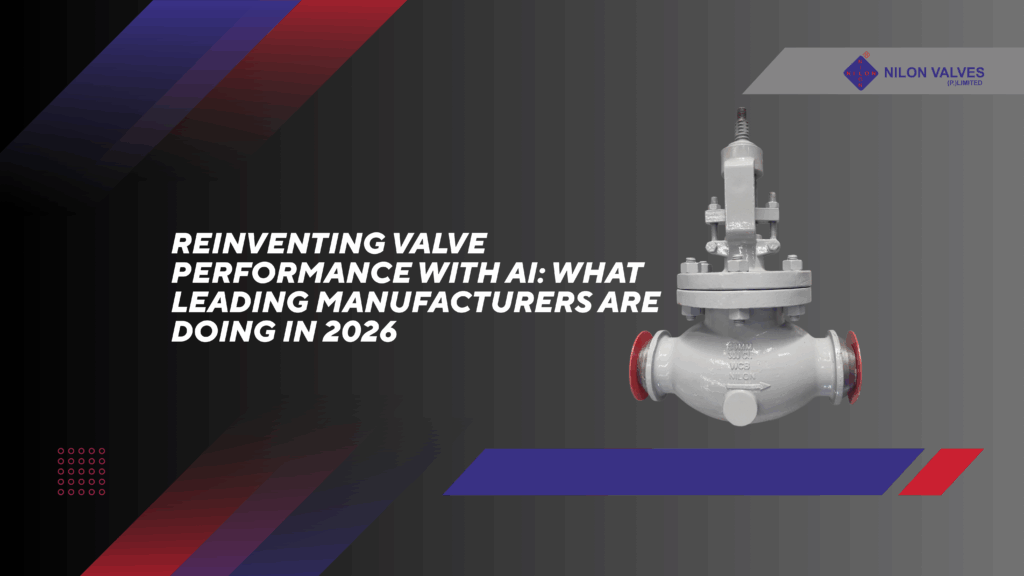
Reinventing Valve Performance with AI: What Leading Manufacturers Are Doing in 2026
Introduction
The industrial valve industry is entering a new era — one driven by intelligent automation, predictive insights, and real-time analytics. Traditional valve engineering focused primarily on mechanical durability, material strength, and design efficiency. But in 2026, Artificial Intelligence (AI) has become the most disruptive force in valve performance and manufacturing.
AI is not only enhancing valve reliability but is transforming everything from production and quality control. Leading valve manufacturers worldwide are integrating AI-powered tools to build smarter, safer, more efficient flow control systems.
1. Why AI Matters in Valve Engineering Today
Global industries — oil & gas, chemicals, pharmaceuticals, power, and water treatment — depend on valves for safe and precise flow control.
The problems they face include:
- Unplanned downtime due to valve failure
- Costly shutdowns caused by leakage or fugitive emissions
- Difficulty detecting early wear and internal mechanical defects
- Inefficient manual inspections and service cycles
AI solves these pain points by turning valve performance into measurable, predictable, and self-optimizing intelligence.
In 2026, smart valve systems can now:
✔ Predict failure before it happens
✔ Optimize actuation cycles automatically
✔ Monitor internal wear in real time
✔ Reduce maintenance cost and frequency
✔ Improve plant-wide efficiency and safety
2. AI-Powered Predictive Maintenance: A Game Changer
Predictive maintenance is one of AI’s most significant contributions to valve performance.
Instead of waiting for a fault or following fixed maintenance schedules, AI algorithms now analyze:
- Temperature levels
- Stem torque usage
- Vibration patterns
- Pressure fluctuations
- Actuator load
This continuous flow of data allows machine learning models to detect abnormalities weeks before the valve actually fails.
Benefits for Manufacturers and Plants:
🔹 40–60% reduction in breakdowns
🔹 Lower spare parts and repair costs
🔹 Fewer emergency shutdowns
🔹 Longer valve operating life
Leading manufacturers are now offering AI-integrated monitoring dashboards, allowing plant operators to see real-time health status of every valve installed.
3. Digital Twin Technology — the New Smart Valve Blueprint
A digital twin is a virtual model of a physical valve — updated continuously with operational data.
Manufacturers use digital twins to:
- Simulate how a valve performs under extreme pressure, corrosion, or chemical exposure
- Predict failure mechanisms even before production
- Test design modifications without building a prototype
Once installed, customers can track wear patterns, seal degradation, and actuation cycles using the same twin model — from factory to long-term field use.
4. AI + IoT: Smart Valves That Think and Respond
AI-driven valves are now connected through Industrial IoT networks using:
- Smart positioners
- AI-enabled actuators
- Wireless monitoring sensors
- Cloud communication gateways
This allows manufacturers to deliver self-learning valve systems, where the valve:
✔ Adjusts opening/closing to reduce seal stress
✔ Learns optimal flow patterns over time
✔ Sends automated maintenance alerts
✔ Cooperates with PLC and DCS systems without human intervention
In 2026, smart valves are not just mechanical devices — they are data-driven machines.
5. Quality Control Reinvented with AI Vision
Traditional valve quality testing involves:
- Manual inspection
- Physical measurements
- Pressure testing
- Third-party certification
Leading manufacturers are now using AI visual inspection systems that detect:
🟢 Microscopic casting defects
🟢 Improper machining tolerance
🟢 Surface deformities
🟢 Misalignment in sealing faces
🟢 Internal crack propagation
6. AI in Manufacturing: Faster, Safer, Leaner
Valve factories are becoming smart manufacturing hubs.
AI is improving:
Material Selection
Advanced algorithms analyze performance data and recommend the ideal material composition for:
- High-pressure valves
- Cryogenic applications
- Corrosive chemicals
- Hydrogen and LNG environments
Production Optimization
AI software automatically adjusts machining parameters for:
- Perfect surface finish
- Optimal seat alignment
- Reduced tool wear
Manufacturers now produce higher-precision valves with less waste, fewer rejects, and shorter production cycles.
Also read: Top Valve Suppliers and Manufacturers in India for Oil, Gas & Water Projects
7. Reducing Fugitive Emissions with AI Analytics
Stricter environmental regulations are forcing plants to reduce leakage and emissions. AI helps by:
- Detecting micro-leaks at the packing area
- Measuring emission threshold crossing in real time
- Forecasting seal degradation
- Alerting maintenance teams before damage escalates
Manufacturers offering AI-integrated low-emission valves now have a key competitive advantage — especially in oil, gas, and chemical industries.
8. How Leading Valve Manufacturers Are Adopting AI in 2026
Global industry leaders are:
🔹 Building Smart Valve Product Lines
Valves equipped with embedded sensors, wireless modules, and AI-based analytics packages.
🔹 Offering Cloud-Connected Support
Remote troubleshooting dashboards that allow real-time visibility for end users.
🔹 Customizing Valve Behavior with Data
Every valve “learns” from its operating environment — making each installation smarter over time.
10. Challenges in AI Adoption
Even though the technology is revolutionary, manufacturers face these hurdles:
❗ High integration cost
❗ Lack of skilled AI technicians’
❗ Compatibility issues with old plant systems
❗ Cybersecurity risks
❗ Customer mindset shift required
The winners will be manufacturers that combine traditional engineering excellence with digital innovation.
11. The Future: What Comes After AI?
The next decade will bring autonomous valve ecosystems, where:
- Every valve communicates with the plant network
- Self-healing coating materials repair surface wear
- Blockchain ensures valve lifecycle traceability
- AI procurement systems select the right valve automatically
AI will not replace valves — it will turn them into future-ready intelligent machines.
Conclusion
AI is not an add-on — it is becoming the new standard for high-performance valve design and manufacturing.
🔹 Longer valve life
🔹 Lower downtime
🔹 Safer operations
🔹 Higher customer confidence
The future of valves belongs to those who embrace intelligence.
In 2026 and beyond, manufacturers who innovate with AI will not just sell valves —
they will provide smart industrial flow control systems that never fail silently.