Sustainable Ball Valve Manufacturing: Materials, Coatings & Energy Efficiency
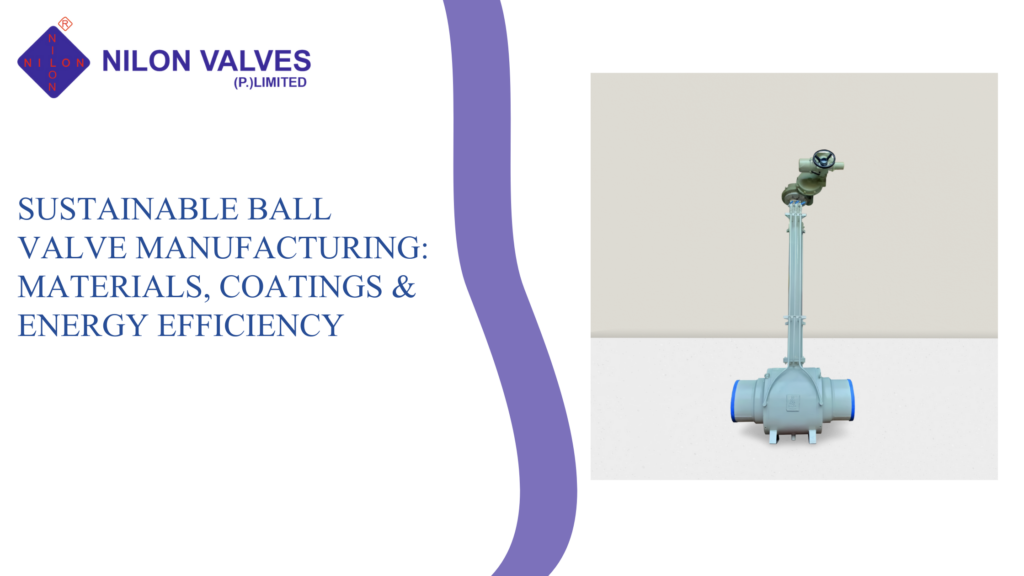
As industries worldwide move toward greener operations and stricter environmental regulations, sustainability is no longer optional — it’s essential. The industrial valve sector, including ball valve manufacturing, is undergoing a significant transformation to align with global sustainability goals. From eco-friendly materials and advanced surface coatings to energy-efficient production methods, manufacturers are redefining how ball valves are designed, produced, and maintained.
Why Sustainability Matters in Ball Valve Manufacturing
Ball valves are widely used in oil & gas, chemical processing, power generation, water treatment, and emerging renewable energy sectors. Given their large-scale industrial use, even small improvements in design, materials, and manufacturing efficiency can result in significant environmental impact reduction.
Sustainable manufacturing focuses on:
- Reducing carbon emissions
- Minimizing raw material waste
- Improving product longevity
- Enhancing energy efficiency
- Reducing leakage and fugitive emissions
- Supporting circular economy principles
1. Sustainable Materials in Ball Valve Manufacturing
Material selection plays a critical role in both performance and environmental footprint.
✔ Recyclable Metals
Most ball valves are made from materials like:
- Carbon steel
- Stainless steel (SS304, SS316)
- Duplex & super duplex stainless steel
- Alloy steels
These metals are highly recyclable, reducing the need for virgin raw materials. Many manufacturers now source recycled steel to lower embodied carbon.
✔ Low-Emission Casting Processes
Advanced casting technologies reduce scrap rates and improve material utilization. Precision casting and controlled machining minimize wastage and improve dimensional accuracy.
✔ Environmentally Safer Seat & Seal Materials
Traditional PTFE and elastomers are now being upgraded to:
- Low-friction, long-life PTFE blends
- Graphite-based sealing materials
- Fire-safe certified materials
- Low-emission packing systems
2. Advanced Coatings for Longevity & Performance
Surface coatings significantly impact durability and energy efficiency.
✔ Anti-Corrosion Coatings
Corrosion is a major reason for valve failure. Sustainable coating solutions include:
- Epoxy-based coatings
- Fusion Bonded Epoxy (FBE)
- Ceramic coatings
- Nickel plating
- HVOF (High Velocity Oxygen Fuel) coatings
These coatings extend valve lifespan, reducing the need for frequent replacement.
✔ Low-Friction Coatings
Advanced surface treatments reduce torque requirements, resulting in:
- Lower actuator power consumption
- Reduced energy demand
- Smoother operation
Lower friction also decreases wear and tear, supporting long-term sustainability.
3. Energy-Efficient Manufacturing Processes
Sustainability doesn’t stop at materials — manufacturing processes matter equally.
✔ CNC Precision Machining
Modern CNC machines improve:
- Dimensional accuracy
- Reduced rework
- Lower scrap generation
- Optimized material use
Automation ensures consistent production while minimizing waste.
✔ Energy-Efficient Equipment
Manufacturers are investing in:
- Energy-efficient furnaces
- Smart power management systems
- Solar-powered manufacturing units
- LED lighting in facilities
These initiatives significantly reduce operational carbon footprint.
4. Designing Ball Valves for Longer Service Life
Product lifecycle thinking is central to sustainable manufacturing.
✔ High-Durability Design
Design improvements such as:
- Trunnion-mounted ball valves for high pressure
- Metal-seated ball valves for abrasive media
- Fire-safe designs
- Blow-out proof stems
These features increase operational reliability and reduce failure rates.
✔ Predictive Maintenance Integration
Smart ball valves integrated with IoT sensors allow:
- Real-time monitoring
- Early fault detection
- Reduced unexpected breakdowns
- Optimized maintenance schedules
This minimizes downtime and extends product life.
5. Supporting Renewable & Green Energy Industries
Sustainable ball valve manufacturing also supports industries like:
- Hydrogen production
- LNG
- Solar thermal plants
- Biofuel processing
- Water recycling facilities
Specialized materials and precision engineering help meet the demanding standards of clean energy sectors.
6. Compliance with Global Environmental Standards
Leading ball valve manufacturers now align with:
- ISO 14001 (Environmental Management)
- API Standards
- RoHS Compliance
- REACH Regulations
- ESG Reporting Frameworks
Compliance enhances credibility in global markets and supports export growth.
7. The Business Advantage of Sustainable Manufacturing
Sustainability is not just ethical — it’s strategic.
Benefits include:
- Reduced operational costs
- Improved brand reputation
- Stronger global buyer trust
- Better regulatory compliance
- Increased export opportunities
- Competitive differentiation
Industrial buyers increasingly evaluate suppliers based on sustainability credentials.
The Future of Sustainable Ball Valves
The next phase of innovation may include:
- Carbon-neutral manufacturing facilities
- Fully recyclable valve components
- AI-driven production optimization
- Digital twins for lifecycle efficiency
- Advanced bio-based sealing materials
As industries accelerate toward net-zero goals, sustainable ball valve manufacturing will become a defining competitive factor.
Read: Important Factors to Evaluate Before Selecting a Ball Valve Manufacturer in India
Conclusion
Sustainable ball valve manufacturing is no longer a future ambition — it is a present-day necessity. As global industries push toward carbon neutrality, reduced emissions, and higher operational efficiency, valve manufacturers must align innovation with environmental responsibility.
Sustainable ball valve manufacturing is transforming the industrial valve industry. By combining recyclable materials, advanced coatings, energy-efficient processes, and smart engineering, manufacturers are reducing environmental impact while improving performance and reliability.
Companies that invest in sustainability today will lead the industrial flow control market tomorrow.
The future of ball valves is not just about strength and durability — it’s about responsibility, efficiency, and innovation.